

Almost every stain we see that's become genuinely unrecoverable was recoverable on the day it happened. What ended it, in nearly every case, was one of three things: heat applied before the stain was treated, friction from rubbing instead of blotting, or simply time — a garment tossed in a hamper for a week while the stain fully oxidizes and bonds to the fiber. Take those three things off the table and the large majority of everyday stains are still on the table when you bring them to us, even a few days later.
The single most useful habit, across every stain type below, is blot rather than rub. Rubbing feels productive — you can see the mark smearing and think you're working it out — but what's actually happening is you're driving the stain deeper into the weave and abrading the surface fibers at the same time. Even after the color eventually comes out with proper cleaning, a hard-rubbed spot often keeps a faint dull patch where the fiber surface was roughed up. Blotting from the outside edge of the stain inward keeps it from spreading and does none of that damage.
By stain type: what to do in the first ten minutes
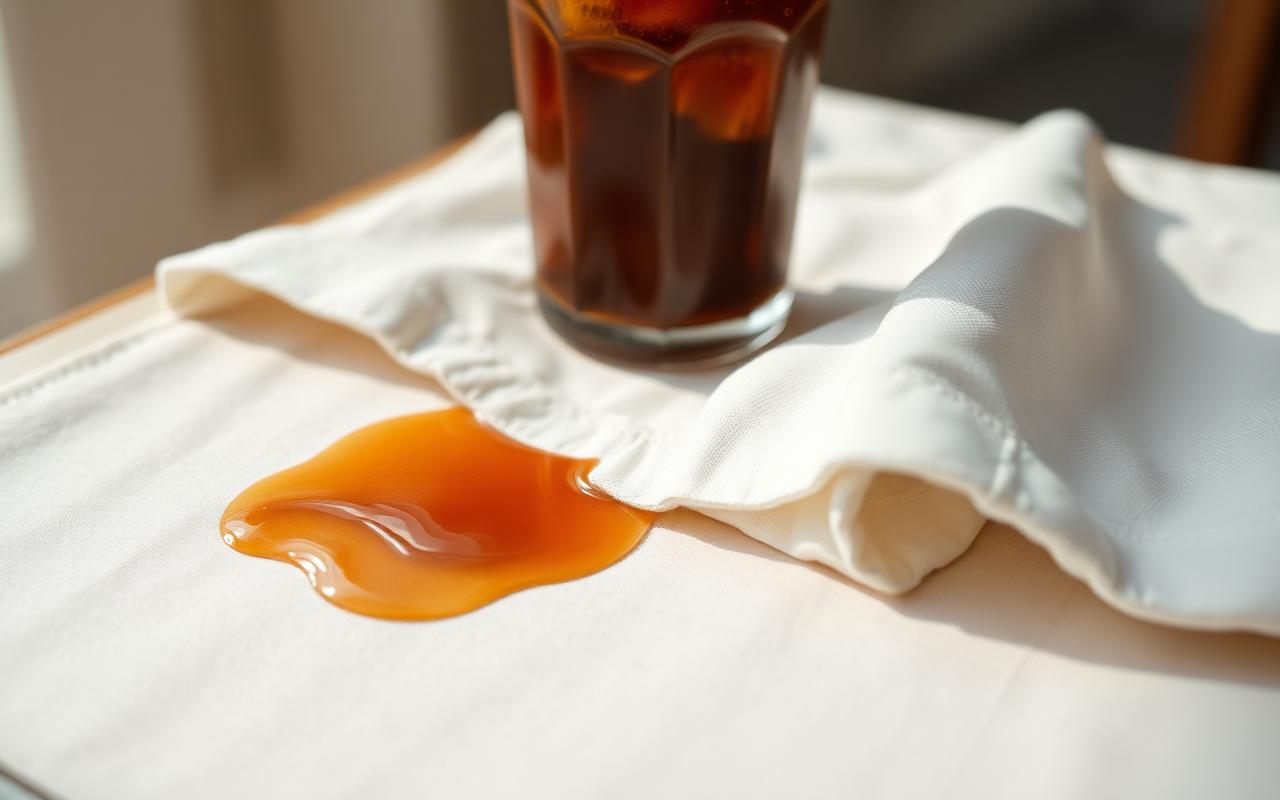
Coffee and tea: blot with cold water from the outside in, no soap, no rubbing. Both are tannin stains loaded with sugar, and sugar caramelizes under heat — so the number one rule is keep it away from a dryer or iron until it's been professionally treated, even if it looks faded.
Red wine: blot, then cold water, blot again. Table salt piled on a fresh spill is a reasonable stopgap on a tablecloth to keep it from spreading while you finish dinner, but it is not a treatment and won't remove the stain on its own. Skip the internet folk remedy of pouring white wine on top of red — it does nothing chemically and just adds more liquid to manage.
Sunscreen: this one surprises people. Sunscreen stains are oil plus, in many formulas, avobenzone, which can react with minerals in tap water and leave a rust-orange mark on white or light cotton that looks nothing like the sunscreen itself. Don't wet it and don't iron it — bring it in and specifically say it's sunscreen, because we treat it as an oil-and-mineral stain, not a simple dye stain, and treating it the wrong way can set that rust tone permanently.
Grease and food oil: no water, ever, at the first-aid stage. Water doesn't dissolve oil — it just pushes it sideways into a wider ring across the fabric, which is how a small drop of salad dressing becomes a saucer-sized stain. Keep it dry, blot up any excess with a paper towel by pressing straight down rather than dragging, and get it to us.
Sweat and deodorant: rinse cold on the day if you're able to. The yellowing that shows up on collars and underarms months later is aluminum salts from antiperspirant bonding chemically with sweat protein over repeated wear and washing — it's not simply dirt, which is why a regular wash cycle alone often doesn't fully remove it once it's set. Cold rinsing soon after wear slows that bonding.
Grass: this is a dye/pigment stain, not oil or protein, and cold water plus time is genuinely counterproductive here — chlorophyll stains often respond better to enzyme-based pretreatment than to a home rinse, and rubbing grass stains (a common instinct on kids' clothes) drives green pigment into light-colored fabric fast. Blot dry, don't rub, bring it in.
Ink: ballpoint and gel ink are solvent-based dyes. Home remedies involving rubbing alcohol can work on some fabrics and permanently set the dye on others, especially silk and some synthetics, so unless you know the exact fiber content, don't experiment — the risk of turning a small dot into a larger smeared patch is real.
Blood: cold water only, never warm or hot, and only if you're treating it within the hour. Heat cooks the protein into the fiber almost immediately, which is the fastest way any stain on this list goes from a five-minute fix to a permanent one.
Makeup and foundation: usually oil-based like grease, sometimes with pigment on top. Blot, don't smear, don't reach for a home stain-remover pen on silk or wool — the surfactants in most stain pens are formulated for cotton and can leave a ring or a texture change on protein fibers.
Stain first aid at a glance
| Stain | Do | Don't |
|---|---|---|
| Coffee / tea | Blot cold water, outside in | Heat, dryer, or iron before treatment |
| Red wine | Blot, cold water, salt as a stopgap only | Rub, or pour white wine on top |
| Sunscreen | Leave it, tell us it's sunscreen | Wet it or iron it |
| Oil / grease | Blot dry, press don't drag | Add any water |
| Sweat / deodorant | Cold rinse same day if possible | Assume a regular wash alone clears it |
| Grass | Blot dry | Rub, or rinse and wait |
| Ink | Leave it, note the fabric | Rub alcohol on silk or unknown fibers |
| Blood | Cold water only, act fast | Warm or hot water, ever |
| Makeup | Blot | Home stain pens on silk or wool |
When to just stop and bring it in
Silk, wool, anything structured like a blazer or a lined dress, anything dyed deep and saturated (navy, burgundy, black), and honestly anything you'd be upset to lose — all four categories are exactly where home treatment turns a small, contained stain into a ring that's genuinely harder to remove than the original mark. A cotton t-shirt can usually absorb an amateur attempt without lasting damage. A silk blouse usually can't. When in doubt, the safest first-aid step is often blot and stop, then bring it in and tell us what happened and how long ago — that context genuinely changes which treatment we reach for first.