

This is one of the most common questions we get at the counter, and the honest answer disappoints people who want a clean number: it depends on how often you wear it, how hot the room was, and whether you sweated in it — but as a working rule, a suit in regular weekly office rotation needs a full clean roughly every 8 to 12 wears, not after every single wear. That surprises a lot of people who were raised on the idea that dry cleaning is what you do after wearing anything nice. For a suit specifically, that instinct is backwards, and it's worth explaining why, because the mistake actually shortens the life of an expensive garment.
A suit jacket is a structural garment, not a shirt. Underneath the visible wool shell there's a chest piece — either fused with heat-activated adhesive or hand-canvassed with actual layers of horsehair and cotton canvas — that gives the jacket its shape across the chest and lapel. There's also lining, shoulder padding, and in most jackets, sleeve heads and roll lines held by stitching and, again, adhesive. None of that structural assembly benefits from repeated cleaning cycles. Wool itself is a genuinely durable, fairly cleaning-tolerant fiber. The canvas, fusing and lining are the parts that degrade first, and they degrade a little more with every mechanical cycle regardless of method. Clean a suit only when it needs it, and you're mostly cleaning wool. Clean it after every single wear for a year, and you're putting thirty-plus cycles a year on canvas and adhesive that were never designed for that.
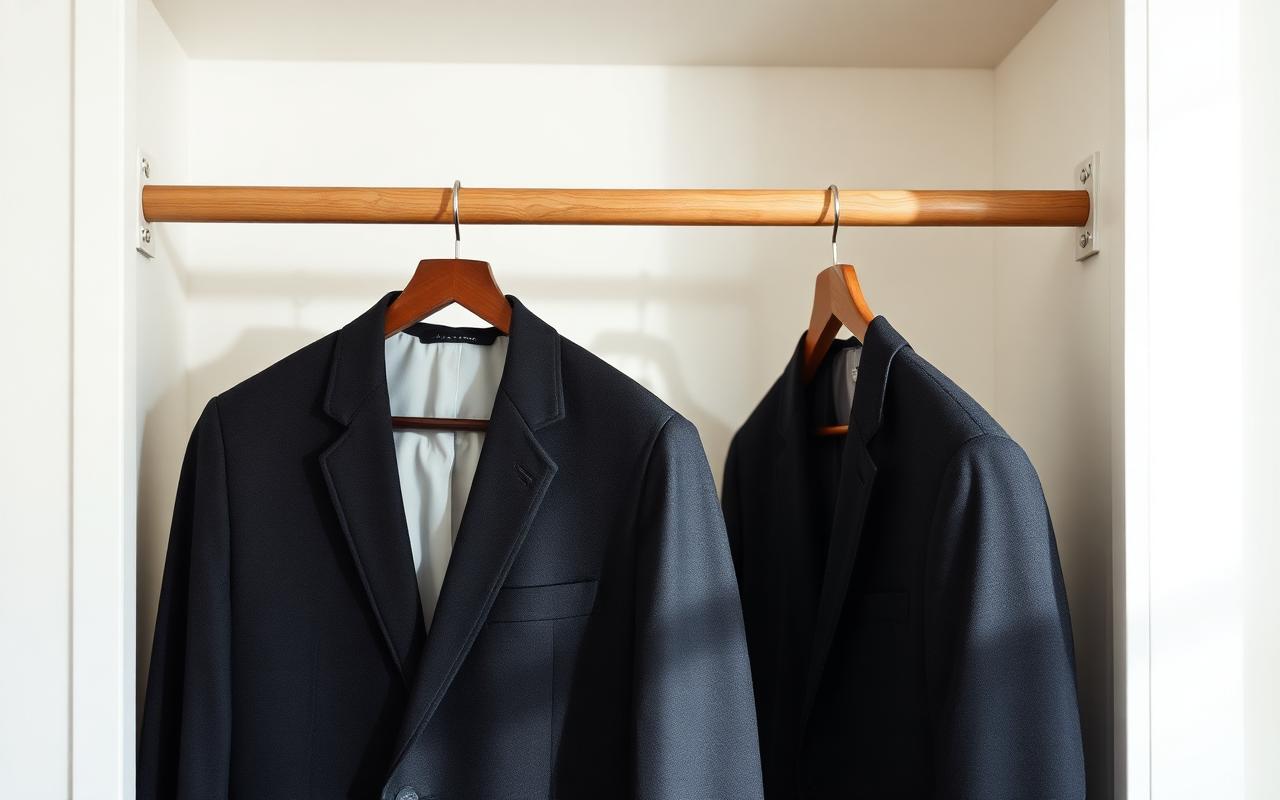
What over-cleaning actually looks like
It rarely shows up as an obvious failure. It shows up as a slow loss of shape: a lapel that used to roll cleanly starting to lie a little flatter, a faint bubble or ripple appearing at the chest where fused interfacing has started to separate slightly from the wool shell, a lining that feels looser or pulls when you put the jacket on. None of those are damage in the sense of a hole or a stain — they're the structural assembly slowly losing integrity from repeated handling, heat and pressure. It happens with any cleaning method, including solvent-free steam-and-air care, just more slowly with methods that skip a solvent bath and hard tumbling.
The fix isn't to avoid cleaning a suit — a suit that's actually dirty, sweat-soaked or stained needs it, and skipping cleaning to "protect" it just trades one problem for another (odor, oil breakdown of fibers, set-in stains). The fix is matching the cleaning cadence to actual soil load rather than to a calendar habit inherited from shirts and everyday clothes.
What handles the gap between cleans
Pressing is the tool that does almost all of the actual work between cleanings, and it's a completely different, much gentler process — it's heat and shape, not soil removal. A suit that's been worn a couple of times and looks a little tired usually just needs a press to look sharp again: creases relaxed, shoulders reset, lapel re-rolled. That's a fraction of the mechanical stress of a full clean and it's what you should be reaching for most of the time. See /pricing for the difference in cost between a press and a full clean — it's meaningful, and it should be, because it's a meaningfully different amount of handling.
The other genuinely useful habit is rotation. Wearing the same suit five days a week and cleaning it constantly to keep up with the wear is a losing pattern. Two or three suits in rotation, each getting 24 to 48 hours to fully air out and let any absorbed moisture and body heat dissipate before the next wear, do more for a suit's working life than any cleaning schedule ever will. Wool fatigues under sustained compression and moisture — the fibers need recovery time on a proper hanger, not just a hook.
A cadence that actually makes sense
| Wear pattern | Suggested full clean cadence | In between |
|---|---|---|
| Occasional (weddings, interviews) | After each wear, or once a season | Air out 24-48 hrs, brush down |
| Weekly office rotation, 1 suit | Every 8-12 wears | Press between cleans, spot-treat marks |
| Weekly office rotation, 2-3 suits | Every 10-15 wears per suit | Rotate daily, press as needed |
| Daily wear (sales, courtroom) | Every 6-8 wears | Rotate at least 2-3 suits, press weekly |
| Visibly stained or sweat-soaked | Immediately, regardless of wear count | N/A — don't wait |

Storage and spot treatment between cleans
- Use a shaped, curved wooden or sturdy plastic hanger that matches the shoulder width — a wire hanger will slowly deform the shoulder line over months.
- Let a suit air out on the hanger for at least 24 hours after wearing before it goes back in a packed closet; moisture needs somewhere to go.
- Leave an inch or two of space between garments in the closet — compressed wool doesn't recover its shape as well.
- Brush down wool with a soft garment brush after wearing to lift surface dust and light debris before it works into the weave.
- Spot-treat only small, fresh marks — blot, don't rub, no water on oil-based marks — and bring anything beyond a tiny fresh spot in rather than attempting a home fix on tailored wool.
- Never store a suit in a sealed plastic dry cleaning bag long-term; it traps moisture. Use a breathable garment bag for travel or long storage.
None of this is about avoiding the cleaner — it's about using the right tool for the actual problem. A suit that smells like a long week, has a visible stain, or has been sweated through needs a full clean regardless of how many times it's been worn. A suit that just looks a little rumpled after two wears needs a press, not a cycle. Getting that distinction right is the single biggest thing that determines whether a good suit looks the same in year five as it did in year one.