

Most dry cleaning in metro Atlanta still runs on perchloroethylene, a chlorinated solvent that has been the industry's default degreaser since the 1930s. PERC is very good at dissolving body oils, sebum and cooking grease, which is exactly why it became standard. It is also volatile, meaning it evaporates readily at room temperature, and a portion of what went into the machine comes back out of your closet for the next few days as a faint, sweetish smell. That smell is the tell. It is not perfume, it is not "clean," it is residual solvent working its way out of the fibres and off the plastic bag. If you have ever unzipped a garment bag and caught that scent before you even got the jacket on the hook, you were smelling chemistry, not hygiene.
We don't use PERC. The Presso-powered process we run instead replaces the solvent bath with three things a customer can actually picture without a chemistry background: heated steam that opens the fibre and loosens soil, filtered air that carries the soil and moisture away, and controlled mechanical pressure that does the work a wash tumbler would otherwise do with agitation. Where a stain needs more than that — a set-in coffee ring, a grease spot on a lapel — we do targeted spotting by hand before the piece goes on the machine, rather than running an entire garment through a solvent bath to chase one mark.

What actually happens to a wool suit jacket
A tailored jacket is not one fabric, it's an assembly: wool shell, often a fused or hand-canvassed chest piece, a lining (usually a synthetic like bemberg or cupro), shoulder pads, and adhesives holding the collar roll and lapel shape. Solvent baths are hard on that assembly in a way that isn't obvious from the outside. PERC swells natural fibres slightly and can soften the resins used in fusible interfacing over repeated cycles — which is part of why a heavily dry-cleaned jacket eventually starts to bubble at the chest or lose its lapel roll. It's cumulative. One cleaning won't ruin a jacket; forty will show it.
Steam-and-air treatment skips that mechanism entirely. There's no solvent bath and no tumbling drum banging the shoulders and collar against the sides of a machine, so the canvas and fusing see far less cumulative stress. Wool actually recovers loft under steam rather than flattening the way it can after a hard mechanical cycle — you can watch a slightly crushed sleeve puff back up as it steams. The other genuinely useful side effect is finishing: because the cycle itself relaxes creases with heat and airflow, a jacket comes off closer to press-ready, and the hand-finishing we do afterward is touch-up rather than a full re-press from a wrinkled starting point.
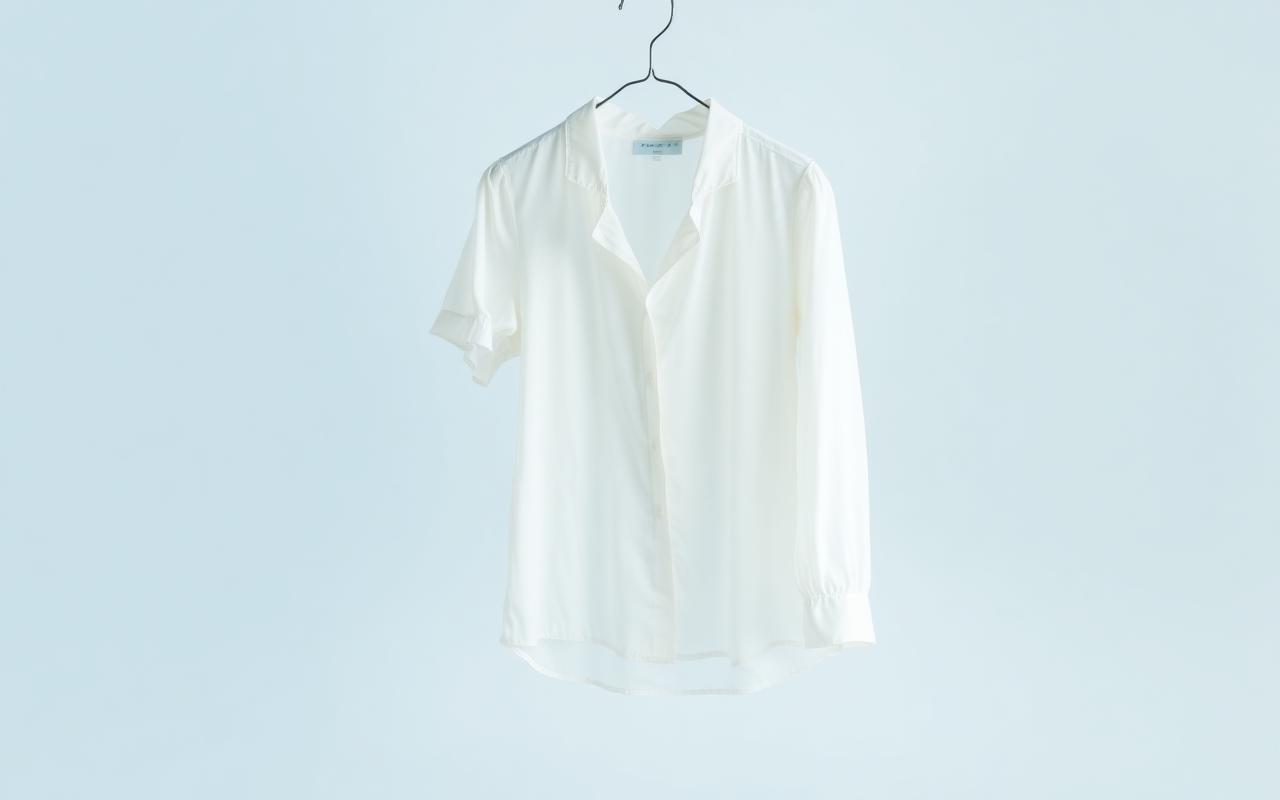
Silk and silk-blend blouses show a similar but distinct benefit. Silk is a protein fibre, and solvent exposure combined with tumbling is one of the more common causes of the dulling and slight yellowing people notice on cream and ivory silk after a few conventional cleanings. Without the solvent bath, that slow yellowing pressure is removed, though silk is still delicate enough that we hand-finish it rather than run it through anything aggressive.
Where conventional treatment, or hand work, still wins
We'd rather lose a sale than run a cycle that can't succeed. Heavy, set-in oil or grease staining on a very densely woven fabric — think an old motor-oil stain on thick canvas work pants — sometimes genuinely responds better to a targeted solvent spotting agent than to steam and air alone, because the oil needs something that will actually dissolve it rather than lift it. We keep spotting agents in the shop for exactly that scenario; it's a targeted application to one stain, not a full-garment solvent bath.
Certain specialty pieces are hand-work regardless of method: leather trim, sequins and beading that can't tolerate heat or pressure, and anything with structural damage that needs a needle before it needs cleaning at all. And we don't take on leather, suede, fur or wedding gown preservation at all right now — that's a capability gap, not a fabric judgment, and we'll tell you honestly at drop-off rather than accept something we can't do justice to.
How to actually tell the difference when you pick up your clothes
- Smell the bag before you open the closet. No sweetish chemical note is the first sign.
- Check a wool jacket's lapel roll after a few cleanings — it should still want to fold naturally along the original line, not lie flat.
- Look at a white or cream shirt collar over several cleanings for a yellow cast building at the edges — a slower change with solvent-free care.
- Ask what happened to a specific stain, not just whether the garment "came out okay." A studio that tells you a mark needed hand-spotting is being straight with you.
The honest summary, from behind the counter: solvent-free is the better default for suits, dresses, wool trousers and the everyday professional wardrobe that makes up most of what walks through our door. It is not a magic fix for every fabric or every stain, and a studio that claims otherwise is selling you a slogan. Bring in the garment, tell us what happened to it, and we'll tell you which of our own methods actually fits — including when the honest answer is a referral.